Understanding
The condition
Arthritis of the joint where the trapezium and the first metacarpal meet. It causes pain, loss of strength and eventually thumb deformity; gripping and pinching become difficult.
Diagnosis
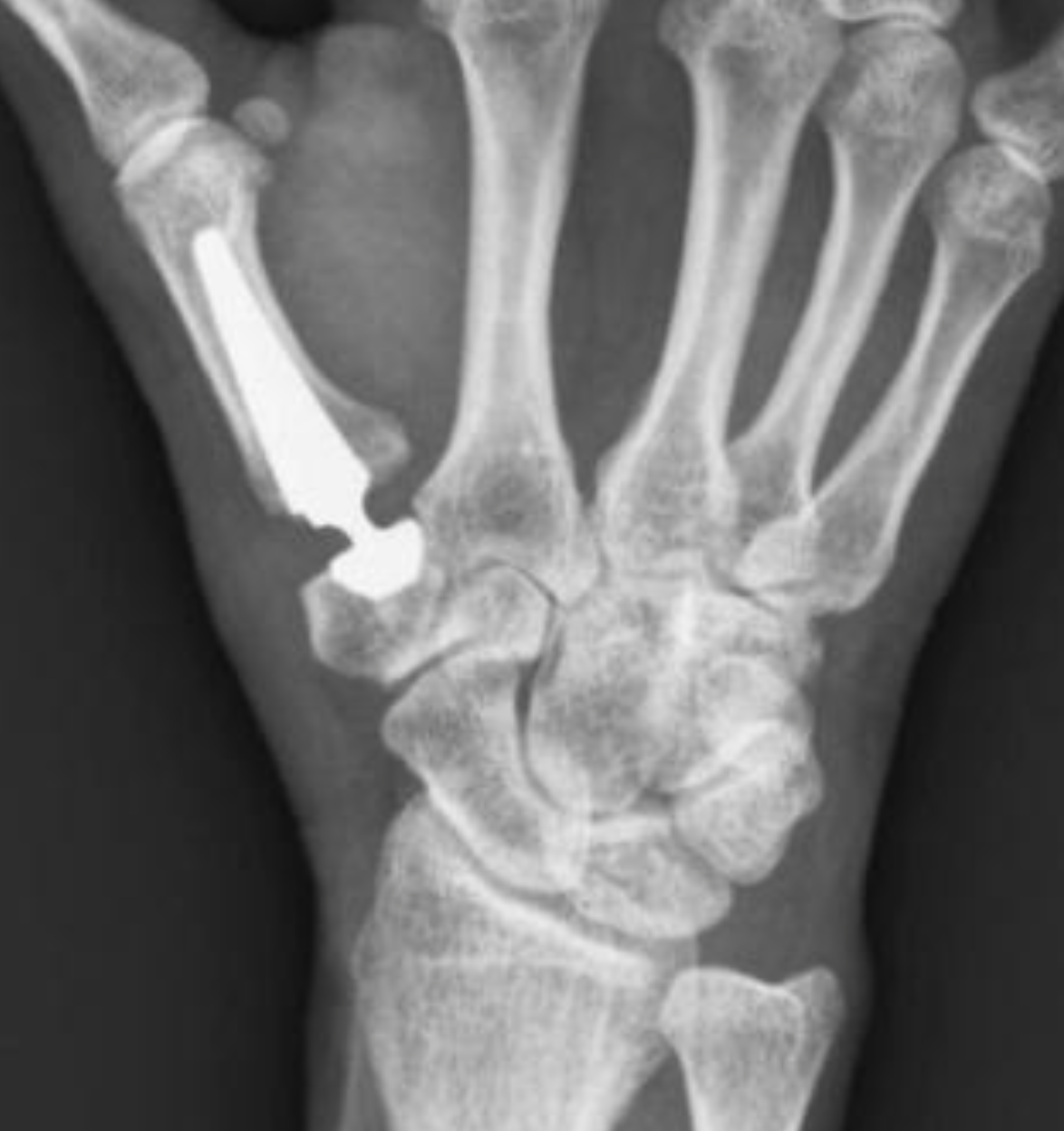
A simple X-ray usually confirms it; a CT scan is sometimes needed for a more detailed view of the joint.
The prosthesis
Three parts: a cup in the trapezium, a stem in the metacarpal and a small head that keeps the tendons and ligaments properly tensioned.
Treatment options
Without surgery
- Splints
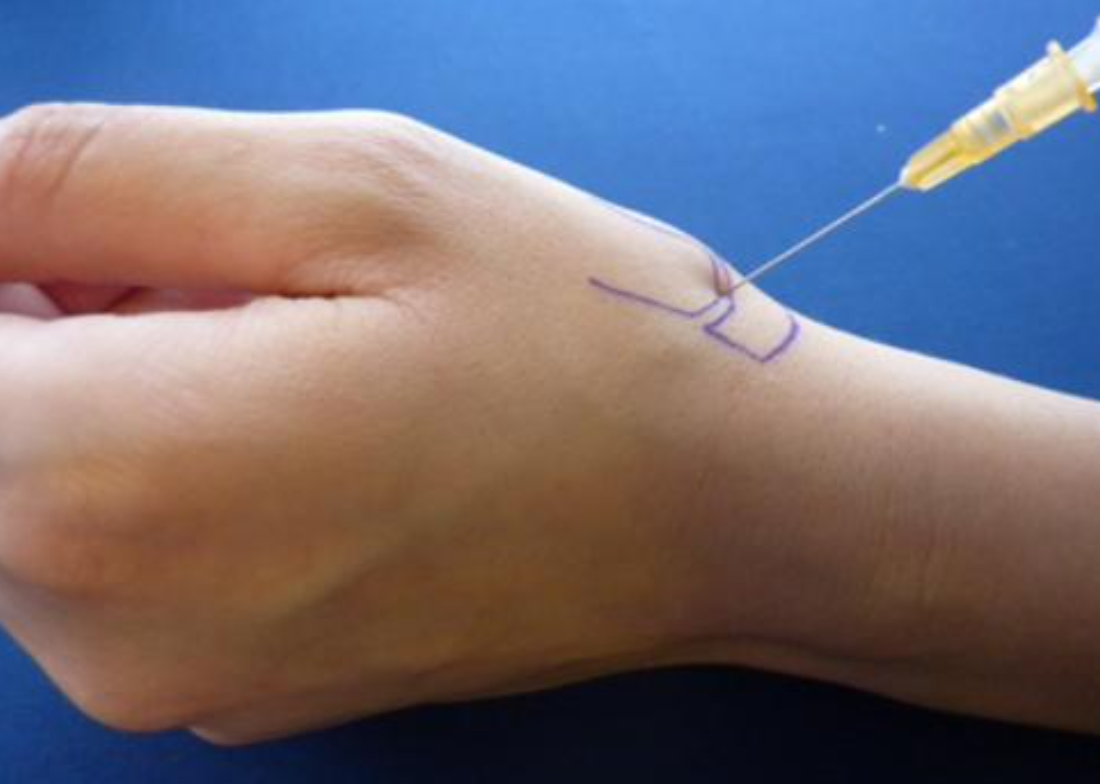
- Cortisone or hyaluronic acid injections
- Helpful mainly in early stages, for a limited time
With surgery
When these treatments stop working or the thumb becomes more deformed: the worn joint is replaced by a prosthesis.
How the procedure works
- 1
Anaesthesia
Regional anaesthesia: you stay awake, but your hand and forearm are numb.
- 2
Incision
A cut of about 3 cm at the base of the thumb.
- 3
Preparation
The damaged joint tissue is removed.
- 4
Prosthesis
The cup, stem and head are placed and adjusted to the tension of the tissues.
During surgery, a small nerve injury (numbness or tingling) or an injury to a nearby artery may occur; these are usually not serious. A fracture of the metacarpal or trapezium can happen, especially if the bone is fragile (osteoporosis); the surgeon may then change the surgical plan.
Before surgery
- Keep your hand clean
- Remove nail polish and jewellery
- Have someone with you when going home
After surgery
- After surgery
Splint or bandage on the wrist and thumb; you go home after seeing the surgeon and receiving your prescriptions.
- First week
Movement exercises usually begin.
- About 4 weeks
End of the wrist and thumb splint; daily activities restart gradually.
- 2 months
Avoid vibration-heavy tasks (like power tools).
Risks and complications
Every procedure carries risks, even when performed under the best conditions. They will be discussed with you during your consultation.
Pain and nerves
- Complex regional pain syndrome (CRPS): painful swelling that limits movement
- Scar sensitivity or temporary numbness in the thumb and index finger
- Tendonitis, like De Quervain’s syndrome
Prosthesis
- Dislocation, which may need another surgery
- Stiffness from extra bone forming around the joint
- Implant loosening if the bones are weak
- Earlier wear if the thumb is overused
Other
- Allergy to metal, causing pain or redness at the scar
To relieve pain and restore the pinch function of your thumb — a long-lasting solution, especially when you follow all the instructions given after surgery.
Sources
- de Jong TR et al. Total joint arthroplasty versus trapeziectomy in the treatment of trapeziometacarpal joint arthritis: a randomized controlled trial. J Hand Surg Eur Vol, 2023.
- Latelise B et al. Complications of prosthesis versus trapeziectomy in trapeziometacarpal joint arthritis: a systematic review. Hand Surg Rehabil, 2024.
- Remy S et al. Trapeziometacarpal prosthesis: an updated systematic review. Hand Surg Rehabil, 2020;39(6):492-501.
This sheet provides general information. It does not replace a consultation, during which your situation is assessed individually.