Understanding
The disease
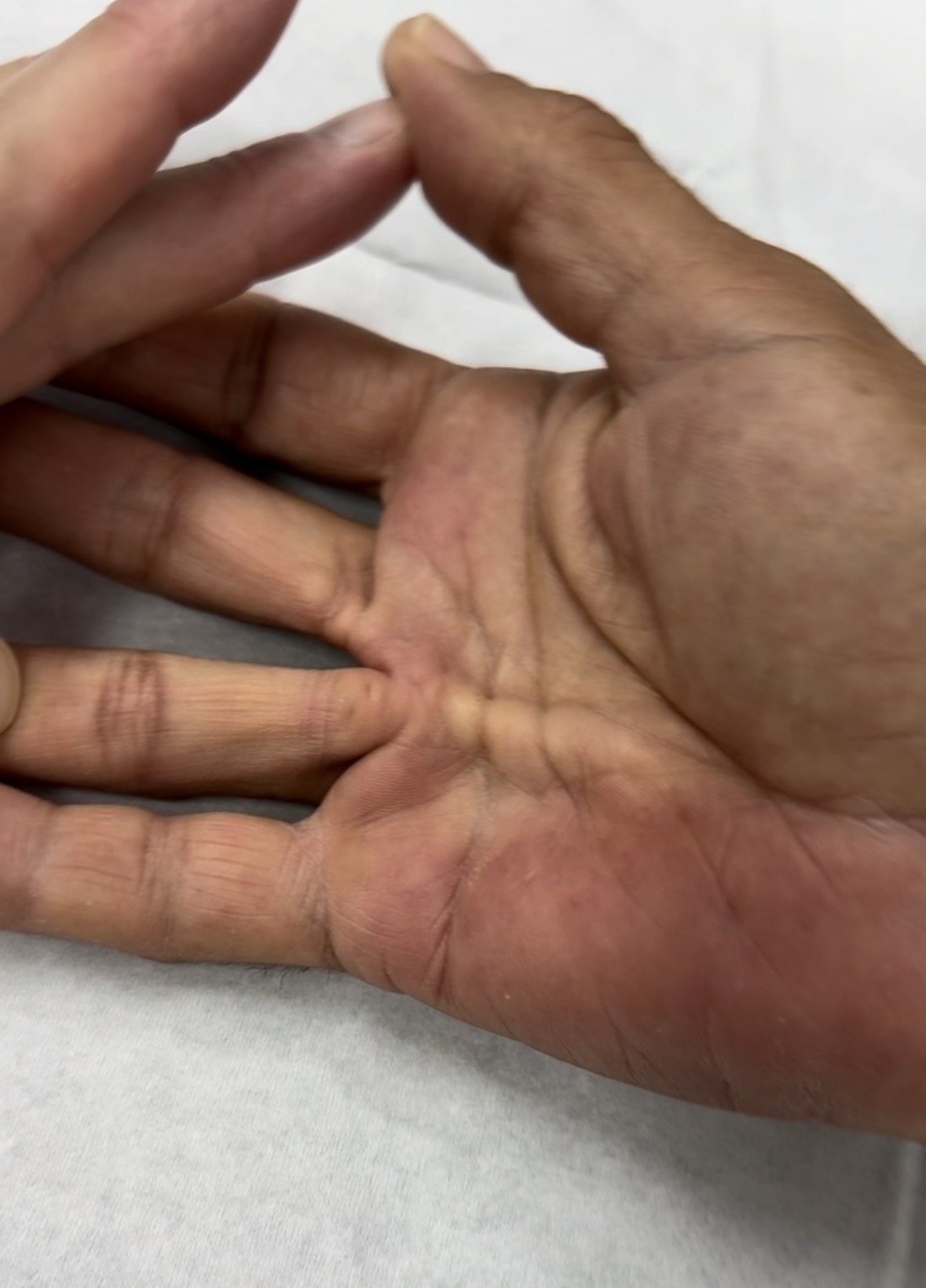
A thickening of the tissue (fascia) under the skin of the palm leads to one or more fingers bending toward the palm. The cause is not fully known; genetics often play a role.
When to operate
When the finger can no longer lie flat on a table (positive tabletop test).
Two approaches
Fasciotomy cuts the tight cord without removing it; fasciectomy removes most of the fibrous tissue.
Treatment options
Needle option (minimally invasive)
- Needle fasciotomy under local anaesthesia, with no incision
- Finger extension is checked during the procedure
- Risks: infection, nerve or blood vessel damage, tendon injury
- It may not prevent the problem from coming back
Open fasciectomy
One or more incisions to remove most of the fibrous tissue, with careful dissection to protect nerves, blood vessels and tendons.
How the procedure works
- 1
Anaesthesia
Regional anaesthesia (the arm is numbed), as a day case.
- 2
Incisions
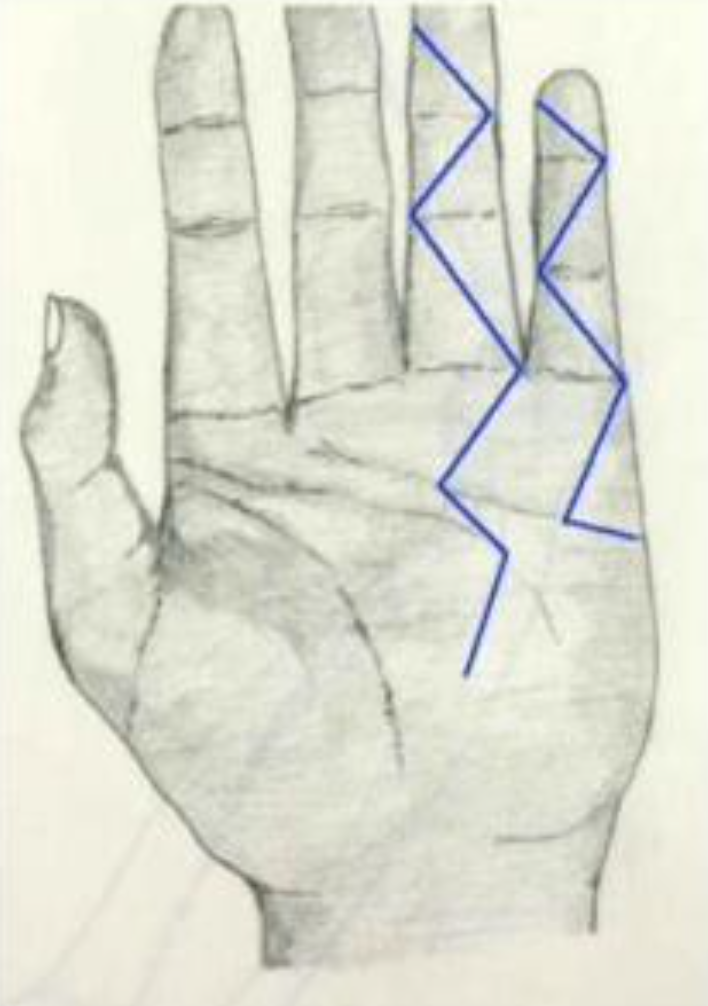
One or more incisions; a special technique (McCash) may be used to avoid scar tension in the palm.
- 3
Dissection
Removal of most of the fibrous tissue while protecting nerves, blood vessels and tendons.
- 4
Duration
Depends on how many fingers are affected and how severe the contracture is.
Before surgery
- Keep the hand clean and dry, especially in case of skin irritation or moisture (maceration)
- Stop smoking, including e-cigarettes, at least 6 weeks before surgery
- Diabetic patients: carefully manage blood sugar levels
- Organise your wound care in advance
After surgery
- Right after
A sling helps reduce swelling; you go home a few hours later.
- Until healed
Dressings must be changed regularly.
- First days
Early physical therapy is recommended.
- 4 to 6 weeks
A dynamic splint may help finger extension.
Risks and complications
Every procedure carries risks, even when performed under the best conditions. They will be discussed with you during your consultation.
During surgery
- Injury to nerves or blood vessels, which can cause numbness or loss of sensation
Skin and scar
- Delayed healing, bruising
- Skin death near the scar
- Thick or stiff scar, usually improving with time and therapy
Rarer
- Infection
- Very rarely, poor blood flow or tissue death in the finger, which may require amputation
- Complex regional pain syndrome (CRPS)
Long term
- Recurrence of the contracture is common
- In severe cases, full straightening of the finger may not be possible
To release the bent fingers so you can lay your hand flat and use it normally again.
Sources
This sheet provides general information. It does not replace a consultation, during which your situation is assessed individually.