Understanding
The condition
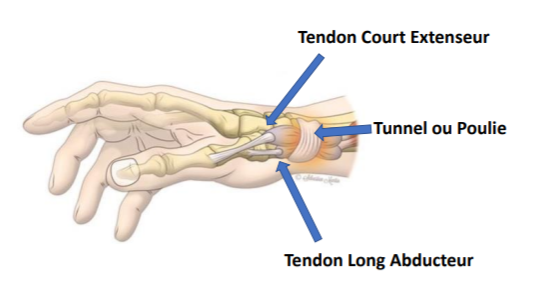
Inflammation of the sheath around two thumb tendons: abductor pollicis longus and extensor pollicis brevis.
Causes
Often repetitive movements or strain.
Symptoms
Pain at the base of the thumb; sometimes a small nerve is irritated or a cyst forms.
Treatment options
Without surgery
- A splint
- Anti-inflammatory medication
- Physical therapy
- Steroid injections
With surgery
If non-surgical treatments do not work: the tight tendon sheath is opened under local anaesthesia to reduce friction and inflammation.
How the procedure works
- 1
Anaesthesia
Local anaesthesia.
- 2
Release
The tendon sheath is opened to remove friction.
- 3
Associated procedures
If needed, a nearby nerve is released or a cyst is removed.
After surgery
- Right away
You can move your fingers and wrist.
- If needed
A temporary splint for comfort.
- Following weeks
Self-exercises at home are usually enough; formal physiotherapy is rarely needed.
Risks and complications
Every procedure carries risks, even when performed under the best conditions. They will be discussed with you during your consultation.
Nerve
- Irritation or injury to the radial nerve (numbness or tingling)
Wound
- Bruising, infection
- Temporary swelling or sensitivity around the scar
Other
- Stiffness
- Rarely, the problem can come back over time
To relieve pain and restore normal thumb movement within a few weeks.
Sources
This sheet provides general information. It does not replace a consultation, during which your situation is assessed individually.