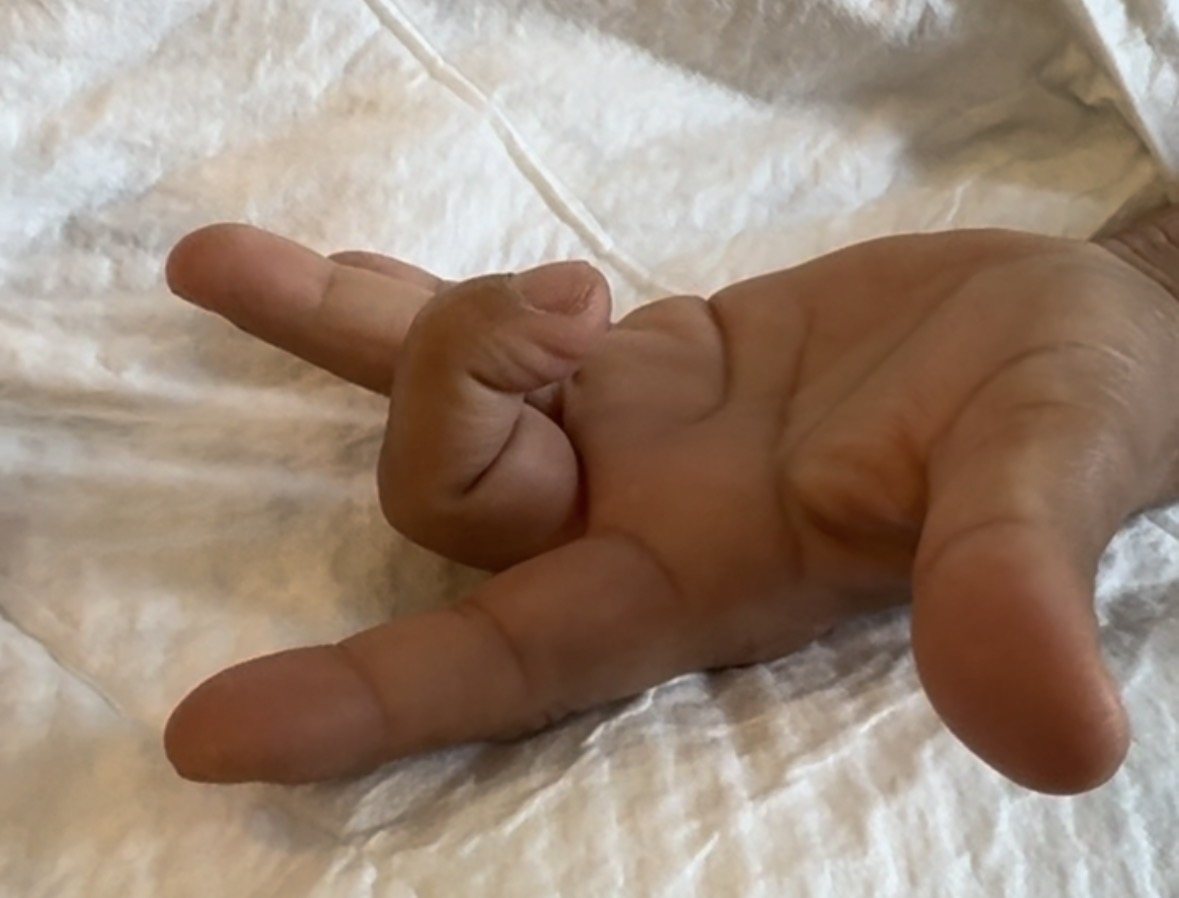
Understanding
The mechanism
The finger tendon becomes swollen or thickened and gets stuck inside its sheath, the tunnel it normally slides through. Over time, the inflammation makes the problem worse.
Symptoms
Pain and a catching or locking feeling when bending or straightening the finger, especially in the morning. In advanced cases the finger may get stuck bent or straight. Any finger can be affected, including the thumb.
Diagnosis
Usually no special tests are needed; an ultrasound may help in early stages. Diabetes and rheumatic diseases increase the risk.
Treatment options
Without surgery
- Cortisone injections to reduce inflammation
- Usually only one or two injections are recommended; the problem can come back
With surgery
If injections don’t work or the finger is badly stuck: part of the tendon sheath is opened to free the tendon, through a skin incision or with an ultrasound-guided technique.
How the procedure works
- 1
Anaesthesia
Local anaesthesia, as a day case.
- 2
Access
Small skin incision, or ultrasound-guided technique.
- 3
Release
Part of the tendon sheath is opened so the tendon can glide freely again.
- 4
Synovectomy if needed
If inflammation is severe, a small amount of tissue is also removed.
After surgery
- Same day
You go home the same day; finger movement is encouraged from the same day.
- About 15 days
Nurse care to look after the wound.
- Following weeks
Hand therapy or exercises may be needed to improve movement.
- Full recovery
Can take a few weeks or even months. Time off work depends on your job and activity level.
Risks and complications
Every procedure carries risks, even when performed under the best conditions. They will be discussed with you during your consultation.
Scar
- Sensitivity or swelling at the scar
- Temporary swelling
Wound
- Small bruising (hematoma), usually goes away on its own
- Rare infection, treated with antibiotics
Function
- Finger stiffness, especially if it was stiff before surgery
- Complex regional pain syndrome (CRPS): a painful reaction needing special care
To let the tendon glide freely again, relieving pain and helping your finger move normally.
Sources
- Donati D et al. From diagnosis to rehabilitation of trigger finger: a narrative review. BMC Musculoskelet Disord, 2024;25(1):1061.
- Ultrasound-guided vs. non-guided trigger finger release: a systematic review and meta-analysis. Int Orthop, 2024;48(9):2429-2437.
- Teunis T et al. Does lidocaine reduce pain intensity during corticosteroid injection? J Hand Surg Eur Vol, 2024.
This sheet provides general information. It does not replace a consultation, during which your situation is assessed individually.